Boost Your Google Rankings in 2026
SEO, Google Rankings, Digital Marketing
How to Make Your Website Show Up on Google in 2026
Getting your website to show up on Google in 2026 is less about tricks and more about building a fast, trustworthy, helpful site that matches what real people are searching for. This guide walks you through the structure, content, technical setup, and ongoing work required to earn and keep visibility, with practical questions and a checklist you can use right away.
What “Showing Up on Google” Really Means in 2026
Before you can improve anything, you need to understand what it means to “show up on Google” today. In 2026, search results are no longer just ten blue links. You are competing for visibility in:
Traditional organic listings (the familiar blue links and snippets)
Local results and map packs for location-based searches
Featured snippets and rich results enhanced by structured data
Google’s AI Overviews and other zero-click answers that summarize content from multiple sites
According to recent analyses of Google ranking factors, search intent match and helpful, people-first content are now the top positive signals for visibility, while spammy, mass-produced AI content and technical blocking issues are among the strongest negatives (searchengineinfo.org, links.me).
📌 Key Takeaway: “Showing up on Google” in 2026 means being discoverable, readable, and recommended by Google’s AI systems wherever your audience is searching, not just ranking for one vanity keyword.
Step 1: Make Sure Google Can Find and Index Your Website (Technical Setup)
No amount of content or design will help if Google cannot crawl and index your pages. Technical setup is the foundation of visibility. In 2026, Google still relies on the basics:
Crawlability: Your pages must not be blocked by
robots.txtor accidentalnoindextags. Misconfigured rules are still one of the most damaging technical mistakes (searchengineinfo.org).Indexability: Use clean HTML, canonical tags, and XML sitemaps so Google knows which URLs to keep and how they relate to each other.
Security & privacy: HTTPS is non‑negotiable, and clear privacy practices align with Google’s focus on safety and trust in rankings.
Technical diagnostic questions
Can you find your site in Google by searching site:yourdomain.com? If not, you likely have an indexing issue.
Have you connected your site to Google Search Console and reviewed the Indexing and Page Experience reports?
Does your CMS or hosting add default
noindextags on staging or new pages that may have leaked to production?
💡 Pro Tip: Fix technical blockers before investing heavily in content and promotion. If Google cannot crawl or index a page, nothing else matters for that URL.
Step 2: Build a Clear, Logical Website Structure
Website structure is how your pages are organized and connected. A clear structure helps both users and search engines understand what your site is about and which pages are most important. In 2026, internal linking and hierarchy remain powerful ranking signals (searchengineinfo.org).
Group related content into logical sections (e.g., “Services,” “Resources,” “Blog,” “About,” “Locations”).
Keep URLs short and descriptive, reflecting this structure (for example, /services/web-design instead of /page?id=123).
Ensure every important page is reachable within three clicks from the homepage.
Internal linking: your built‑in SEO power tool
Internal links pass authority around your site and help Google discover and understand pages. They also guide visitors to the next helpful step, improving engagement and user satisfaction—both key signals in modern ranking systems like NavBoost (searchengineinfo.org).
Use descriptive anchor text (for example, “website redesign services” instead of “click here”).
Link from high-traffic pages to key service or product pages you want to rank.
Create “hub” pages that summarize a topic and link to more detailed articles, and have those articles link back to the hub.
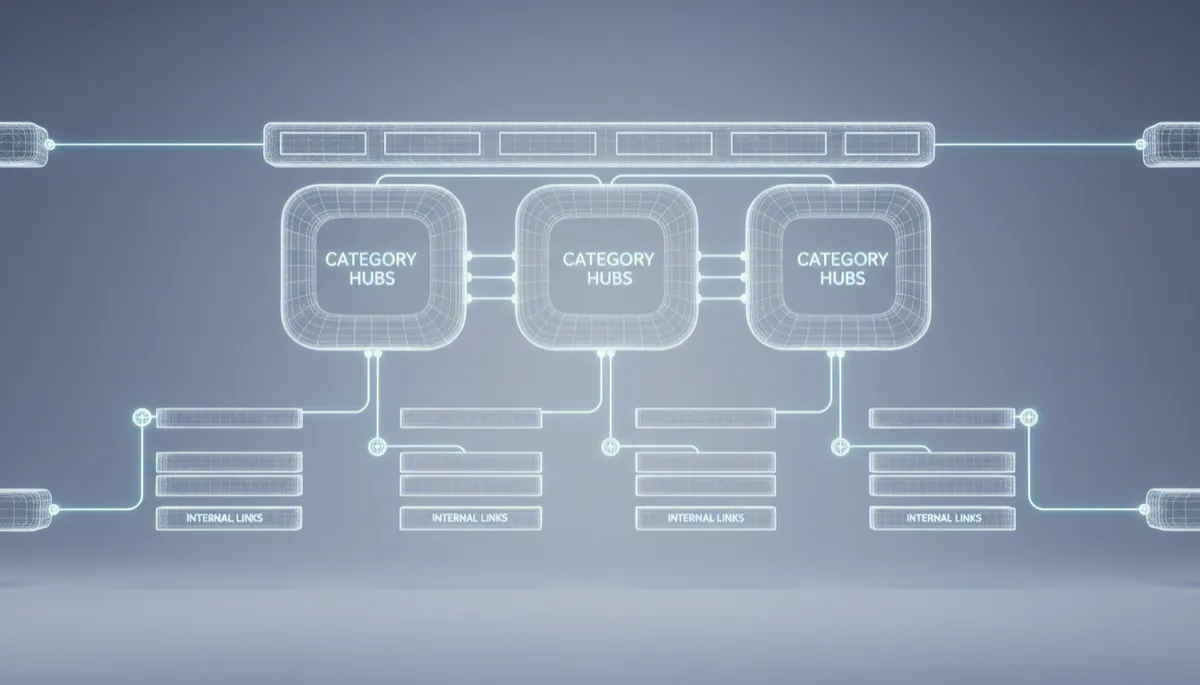
Clear site architecture and internal links help Google understand what matters most on your website.
Step 3: Create High‑Quality, Helpful Content Around Real Search Intent
Content remains the core of SEO. In 2026, Google’s systems emphasize helpful, people‑first content that aligns with search intent and demonstrates real-world experience and expertise (E‑E‑A‑T) (analytify.io). That means:
Answering the question behind the query, not just matching keywords.
Providing original insights, data, examples, or experiences that users cannot get elsewhere.
Keeping content up to date, especially in fast‑moving topics like finance, health, or technology.
Understanding search intent in practice
Search intent is why someone is searching. In 2026 surveys of SEO professionals, matching intent ranks as the single most important positive ranking factor (links.me). Common types include:
Informational: “how to fix slow website,” “what is local SEO”
Transactional: “buy running shoes online,” “SEO audit service pricing”
Commercial research: “best web design agencies,” “top CRMs for small business”
Navigational: “NeoCraft Digital website,” “Google Search Console login”
To create pages around real search intent, look at the current top results for your target query. Are they in‑depth guides, product pages, comparison lists, or local listings? Your content should match the format and depth users clearly prefer, while adding something better or more complete.
Practical content diagnostic questions
Would a real person bookmark this page, share it, or return to it later?
Does the page clearly state who wrote it, and why they are qualified to speak on the topic?
Does it fully answer the main question, plus the follow‑up questions people naturally have?
📌 Key Takeaway: High‑quality, helpful content is not just long—it is focused, clear, and genuinely useful for a specific intent. Google’s helpful content systems reward this and downrank thin, generic, or obviously AI‑generated pages.
Step 4: On‑Page SEO Essentials — Titles, Meta Descriptions, URLs, and Images
Optimizing page titles and meta descriptions
Your title tag is often the first thing people see in Google results, and it heavily influences click‑through rate—an important user satisfaction signal. In 2026, best practices include:
Include your primary topic or keyword naturally near the beginning (for example, “Local SEO Checklist for 2026 | Your City Agency”).
Keep it clear and specific rather than click‑baity; match the promise of the content.
Meta descriptions do not directly change rankings, but they strongly influence whether searchers choose your result. Write them like short ad copy that summarizes the benefit of clicking through and includes relevant phrases users might search for.
Clean, descriptive URLs
URLs are a minor but meaningful signal of relevance and also impact user trust. Use short, readable slugs that describe the page topic, separated by hyphens, and avoid unnecessary parameters where possible: /local-seo-strategies-2026 is better than /blog/article-98765.
Image optimization in an increasingly visual web
Visual and video search continue to grow, and Google now relies heavily on alt text, file names, and surrounding content to understand images (HubSpot). For each image:
Use descriptive, keyword‑relevant file names (for example, website-structure-internal-links.png).
Add meaningful alt text that describes what is in the image and why it matters to the page.
Compress images for fast loading without sacrificing clarity.
Step 5: Prioritize Mobile Experience and Website Performance
Google’s focus on user experience has only increased. Core Web Vitals (loading speed, interactivity, and visual stability) and mobile usability are key ranking tiebreakers (searchengineinfo.org). More importantly, they determine whether visitors stay or bounce.
Use responsive design so pages adapt to all screen sizes and orientations.
Minimize heavy scripts, large images, and unnecessary pop‑ups that slow down or interrupt the experience.
Test your site with Google’s Core Web Vitals and PageSpeed Insights tools and prioritize fixes for slow or unstable pages.
Performance diagnostic questions
Does your site load in under 2–3 seconds on a typical mobile connection?
Are buttons and links easy to tap without zooming or mis‑clicking?
Do elements jump around as the page loads, making it hard to read or interact?
💡 Pro Tip: Faster, smoother pages not only help rankings—they also convert better and reduce ad spend waste across your digital marketing campaigns.
Step 6: Local SEO Signals and Accurate Business Information
If you serve customers in specific cities or regions, local SEO is essential for showing up in map packs and nearby searches. Local signals have grown even more important as Google personalizes results based on location (Search Engine Journal).
Core local SEO strategies
Claim and optimize your Google Business Profile with accurate name, address, phone number, hours, and categories.
Maintain consistent business information (NAP) across your website, directories, and social profiles to avoid confusing Google’s local algorithms.
Encourage and respond to reviews, demonstrating active engagement and customer care.
Local content and links
Create location‑specific pages and content that reflect how people search in your area (for example, “web design agency in Austin” or “emergency plumber near me”). Earning relevant local links—from chambers of commerce, local publications, or event sponsorships—reinforces your presence and trust in that market.
📌 Key Takeaway: Local SEO is not just about adding a city name to your keywords. It is about consistent, accurate business information, localized content, and genuine connections in your community.
Step 7: Earn Relevant Links and Build Authority
Backlinks—links from other sites to yours—remain one of the strongest correlation signals for rankings in 2026. Links from trusted, topically relevant domains help Google see your site as authoritative (searchengineinfo.org). However, spammy link schemes are more likely than ever to be devalued or penalized in Google’s core and spam updates.
Create link‑worthy assets: in‑depth guides, original research, tools, or checklists others naturally want to reference.
Build relationships with relevant publications, partners, and creators in your niche for guest content and mentions.
Avoid buying bulk links, automated link networks, or irrelevant directories—these are exactly the patterns Google’s 2026 spam systems are designed to catch.
Step 8: Use AI Carefully and Strategically in Your SEO
AI is now central to both marketing workflows and Google’s own ranking systems. Most marketers use generative AI for tasks like research, drafting, and analysis (Stripo), and Google’s AI Overviews often synthesize content from multiple sources. But mass‑produced, low‑quality AI content is a clear negative signal in expert surveys (links.me).
Cautious, effective use of AI for SEO
Use AI to brainstorm topics, outline content, and analyze search results—but ensure a human expert shapes the final message and checks for accuracy and nuance.
Avoid publishing AI‑generated text without editing or adding real expertise. Google’s E‑E‑A‑T framework favors content that reflects authentic experience and trustworthiness.
Use AI to personalize and test variations of titles, meta descriptions, and calls‑to‑action, then measure which versions improve engagement and conversions.
💡 Pro Tip: Think of AI as an assistant, not an author. It should accelerate your strategy and execution, not replace your expertise or ethics.
Step 9: Treat SEO as an Ongoing Process, Not a Quick Fix
Google’s algorithm updates throughout 2026—core updates in March and May, and a major spam update in June—have shown how dynamic search rankings are. Sites that rely on short‑term tricks often see sharp declines when quality standards tighten, while those that invest in user experience, content, and authority tend to remain resilient.
Review performance and search queries regularly in Google Search Console and analytics tools to spot new opportunities or issues.
Update and improve existing content instead of only publishing new pieces—refreshing and consolidating pages often leads to stronger rankings than endless expansion.
Monitor competitors, emerging search features (like new AI modules), and user behavior trends to keep your strategy aligned with reality.
“SEO in 2026 is not a set‑and‑forget channel; it is an ongoing practice of making your website the best possible answer for your audience.”
Practical Diagnostic Questions for Your Website’s Google Visibility
Can Google access my pages? Are there crawl errors, blocked resources, or widespread noindex tags?
Is my site organized logically? Could a new visitor—and Google—quickly see my main topics and navigate between them?
Does each key page target a clear search intent? Or am I trying to rank one page for everything?
Are my titles, descriptions, URLs, and images optimized? Do they make sense to humans first, and reflect the page topic clearly?
Is my site fast and mobile‑friendly? Do Core Web Vitals reports show issues I have not addressed?
Do I have relevant internal and external links? Are my best pages supported by internal links and trusted sites in my niche?
Is my business information accurate and consistent everywhere? Especially on Google Business Profile and key directories?
A 2026 Checklist for Making Your Website Show Up on Google
Google can crawl and index all important pages (no critical blocks or errors).
Site structure is logical, with clear navigation, topic hubs, and internal links.
Each key page is built around a specific, real search intent and offers high‑quality, helpful content that demonstrates expertise and experience.
Titles, meta descriptions, URLs, and images are optimized for clarity, relevance, and engagement—without keyword stuffing or clickbait.
Mobile experience is smooth, fast, and visually stable; Core Web Vitals are within recommended thresholds where possible.
Local signals are strong: accurate business information, optimized Google Business Profile, localized content, and genuine local links and reviews (if you serve local markets).
You are earning relevant, editorial backlinks from trusted, topic‑aligned sites—not buying or automating low‑quality links.
AI is used cautiously to support research, ideation, and testing, while human experts own the final content and strategy.
SEO is integrated into an ongoing process of measurement, improvement, and collaboration across design, development, content, and marketing.
How NeoCraft Digital Helps You Build a Stronger, Search‑Ready Presence
Making your website show up on Google in 2026 is no longer just an “SEO task.” It is the outcome of how well your design, development, content, technical setup, and digital marketing all work together—and how intelligently you use AI throughout that ecosystem.
NeoCraft Digital takes an integrated approach:
Design: Crafting user‑centric layouts that make it easy for visitors (and Google) to understand your value and move through your site.
Development: Building fast, secure, technically sound websites that meet modern standards for crawlability, performance, and accessibility.
SEO: Aligning site structure, on‑page optimization, local signals, and link strategies with the latest ranking factors and best practices for 2026 and beyond.
Digital marketing: Driving the right traffic through search, social, and paid campaigns, and turning that attention into leads and sales with clear messaging and nurturing journeys.
AI: Using AI tools responsibly to accelerate research, content planning, testing, and personalization—always grounded in human expertise and ethical standards.
When these disciplines work together, your website becomes more than a digital brochure. It becomes a living, evolving asset that Google can confidently surface—and that your audience is happy to discover, explore, and trust.
If you are ready to move beyond quick fixes and build a search‑ready presence that can weather algorithm changes and shifting trends, partnering with an integrated team like NeoCraft Digital can give you the structure, strategy, and ongoing support you need.